

Why Investors Are Pouring Capital Into Robotic Coffee Startups in 2026 — and Where the Smart Money Is Going
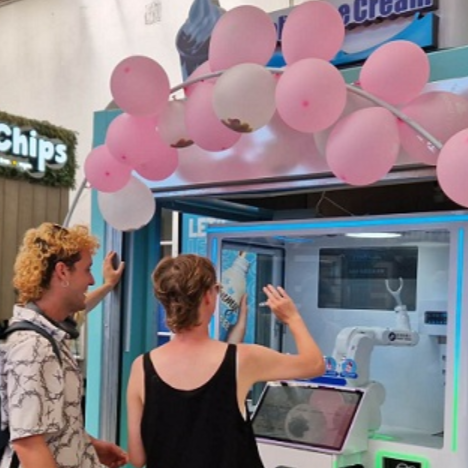
With 16.8% CAGR, 70–85% margins, and sub-12-month payback periods, AI coffee automation attracts venture capital, franchise operators, and independent investors seeking scalable passive income
NEW YORK — August 28, 2026 — The robotic coffee industry is experiencing a capital influx that signals a structural shift in food service investment. As labor costs climb past sustainable thresholds in major markets, hardware prices decline, and deployment data accumulates across 60 or more countries, investors are repositioning capital toward automated beverage platforms that offer margin profiles and scalability characteristics absent from traditional café economics.
The numbers tell the story clearly. The global robot barista market reached $2.18 billion in 2026 and is projected to hit $4.05 billion by 2030, growing at a 16.8% compound annual growth rate. Within this expansion, AI-powered coffee kiosks have emerged as the highest-return segment, delivering documented payback periods of two to eighteen months and annual return on investment exceeding 100% in validated deployments.
For investors evaluating where to allocate capital in the automated retail space, the robotic coffee category presents a rare combination of proven unit economics, declining entry barriers, and expanding addressable market.
The Capital Efficiency Argument
Traditional food service investment requires substantial upfront capital with extended timelines to profitability. Opening a single independent café in a major market typically demands $200,000 to $500,000 in startup investment, with break-even timelines stretching 24 to 36 months under favorable conditions. Each additional location requires proportional capital, staffing, and management complexity.
Robotic coffee kiosk investment inverts this equation. Total capital requirement for a single-unit deployment ranges from $28,000 to $80,000 — representing a 75% to 90% reduction in startup capital compared to the traditional model. More critically, the payback period compresses dramatically: operators in high-traffic locations report full capital recovery within two to six months, with moderate-traffic deployments achieving the same milestone within eight to fourteen months.
"The capital efficiency is the headline," noted VendingLab in its 2026 Robotic Cafe ROI analysis. "A $50,000 robotic unit pays for itself in labor savings alone before you count a single cup sold."
This capital efficiency creates a fundamentally different risk profile. If a traditional café underperforms, the investor faces months of lease obligations, staff commitments, and sunk renovation costs. If a robotic kiosk underperforms, the unit can be relocated to a higher-traffic venue, resold on the secondary market, or redeployed to a different market — options that do not exist with a build-out-dependent café lease.
Where the Venture Capital Is Flowing
The venture capital community has taken notice. The robotic coffee sector has attracted multiple rounds of funding across Asia, Europe, and North America, with investors drawn to the combination of recurring revenue potential, technology differentiation, and addressable market scale.
COFE+ (Shanghai Hi-Dolphin Robotics) has completed five rounds of venture capital financing, making it the most-funded company in the global coffee robot sector as of mid-2026. Manna Coffee, an AI-native autonomous coffee kiosk network, raised $1.25 million in seed financing at a $15 million pre-money valuation, targeting the activation of more than 500 locations. These funding rounds validate the commercial model and establish valuation benchmarks for the category.
The investment thesis driving these rounds rests on three pillars: hardware margin expansion as manufacturing costs decline, recurring revenue from consumables and software subscriptions, and network effects from multi-unit fleet operations that reduce per-unit costs through centralized procurement and shared logistics.
"For venture investors, the robotic coffee space offers something rare in food tech: a capital-light expansion model with documented unit economics," observed a May 2026 analysis from Restaurant Finance Advisors. "You are scaling a piece of hardware, not a payroll."
Unit Economics: The Numbers Behind the Investment Case
Understanding the unit economics is essential for any investor evaluating robotic coffee as an asset class. The financial structure differs fundamentally from traditional food service in ways that favor the operator.
A robotic coffee kiosk in a moderate-traffic location — an office building lobby, a secondary mall corridor, or a university campus — generates the following baseline economics:
Monthly revenue at 100 cups per day and $4.50 average price: approximately $13,500. Consumable costs at $0.50 per cup: $1,500. Location fees at 15% of gross revenue: $2,025. Electricity, connectivity, and maintenance: $500. Total monthly operating expenditure: approximately $4,025. Monthly net profit: approximately $9,475.
Against a total investment of $40,000 to $60,000, this produces a payback period of approximately four to six months and an annualized return on investment exceeding 180%.
In high-traffic locations — airport terminals, premium shopping malls, and 24-hour hospital facilities — these numbers compress further. Airport operators report daily volumes of 150 to 400 cups at premium price points of $5.00 or higher, generating monthly net profits of $12,000 to $18,000 per unit with payback periods as short as two to four months.
The per-cup cost structure underpins the margin advantage. Ingredient costs for a high-quality beverage — fresh-ground beans, real milk, syrups, and branded cups — run approximately $0.30 to $0.70 depending on recipe complexity and local sourcing. There is no barista wage, no shift scheduling, no overtime, no training expense, and no turnover cost. The margin on each cup flows directly to equipment payback and operator profit.
The Multi-Unit Scaling Thesis
For investors seeking portfolio-scale returns rather than single-unit income, the multi-unit scaling thesis presents the most compelling dimension of the robotic coffee investment case.
Traditional café chains face linear cost scaling: each additional location requires a full staff, complete renovation, and proportional management overhead. The operational complexity of managing ten café locations — with fifty or more employees, multiple lease commitments, and supply chain coordination — demands a substantial management infrastructure.
Robotic kiosk fleets scale differently. A single operator can manage 10 or more units through a cloud-based dashboard, monitoring real-time sales, inventory levels, and machine health diagnostics across the entire fleet from a single interface. There are no new hires required for each additional unit — the same restocking visits and remote monitoring infrastructure serve the expanding network.
Centralized ingredient procurement across multi-unit fleets typically reduces supply costs by 15% to 25%, directly expanding per-cup margins. Industry projections suggest that a well-managed fleet of five to ten units can generate $200,000 to $400,000 in annual net profit with part-time operational commitment.
This scaling model attracts investors who understand that the most valuable asset in the portfolio is not the hardware itself — it is the operational infrastructure and location network that enables rapid, low-cost expansion.
The Turnkey Advantage: Reducing Operator Friction
One of the historical barriers to robotic kiosk investment has been the perceived complexity of deployment, branding, supply chain management, and ongoing operations. The emergence of turnkey solutions has substantially lowered this barrier.
Companies operating at scale now offer integrated packages that eliminate the need for investors to coordinate across multiple vendors. Moocoo, for example, delivers hardware, custom branding, bean and consumable sourcing, location scouting with footfall data, cloud operations platform, and lifetime technical support — all under a single contract with one point of contact.
"The six things you'd otherwise chase across a dozen suppliers — all under one roof, one contract, one point of contact," the company describes its model. Moocoo's turnkey approach includes hardware delivery and commissioning, brand identity development, supply chain automation, site selection support, remote fleet management, and ongoing training and parts supply.
This structure is particularly relevant for investors who are not seeking to operate the machines themselves. The turnkey model enables a "hands-off" investment approach where the investor provides capital, the supplier handles deployment and operations, and revenue is generated through a managed service arrangement or revenue-sharing structure.
For investors evaluating franchise-style opportunities without franchise fees or royalties, the turnkey direct-purchase model offers an attractive alternative. Operators deploying through integrated partners retain full ownership of their brand, equipment, and revenue — a structure that preserves long-term value in ways that traditional franchise agreements do not.
Risk Factors and Due Diligence Considerations
No investment thesis is complete without an honest assessment of risk. Robotic coffee kiosk investment carries specific risks that investors should evaluate through rigorous due diligence.
Location risk is the primary variable. A robotic kiosk in a high-traffic location generates strong returns; the same unit in a low-traffic location may underperform significantly. Investors should verify foot traffic data independently, conduct physical site visits during multiple time windows (including overnight hours for 24/7 deployments), and stress-test revenue projections against conservative volume assumptions.
Technology risk has diminished substantially as the category matures, but investors should evaluate the supplier's patent portfolio, certification credentials, deployment track record, and warranty terms. A supplier with 70 or more patents and deployment across 60 or more countries demonstrates the kind of operational maturity that reduces technology risk.
Market risk includes potential regulatory changes, shifts in consumer preferences, and competitive dynamics as the category attracts additional entrants. The diversified form factors available in 2026 — indoor kiosks, outdoor weatherproof units, mobile coffee cars, and modular multi-product platforms — provide some mitigation against market-segment-specific risk.
Maintenance and consumable supply chain risk is manageable but real. Investors should confirm that the supplier provides reliable consumable sourcing, remote diagnostic capabilities, and responsive technical support to minimize downtime.
The 2026 Investment Window
The conditions in 2026 create a particular inflection point for robotic coffee investment. Several factors suggest that the current window offers favorable entry conditions:
Hardware costs have declined from $150,000 in 2020 to $28,000–$80,000 in 2026, while capability has simultaneously improved. This trend is expected to continue but at a decelerating rate, suggesting that the cost-to-capability ratio is approaching an optimal entry point.
Consumer acceptance of unmanned service has matured to the point where novelty is no longer the primary driver — convenience, speed, and consistency are. This transition from novelty-driven to utility-driven demand creates more sustainable revenue patterns.
High-traffic locations in major markets are being claimed by early movers. Airports, premium malls, hospital systems, and corporate campuses are signing placement agreements that lock in locations for multi-year terms. Investors who delay entry face a progressively constrained addressable market.
The labor cost trajectory in developed economies continues upward, widening the cost advantage of automation with each passing quarter. Minimum wage increases in cities like San Francisco, New York, London, and Sydney have crossed thresholds that make traditional café staffing economically unsustainable for many operators.
Where Smart Money Is Going
The investment thesis for robotic coffee in 2026 is not speculative — it is documentable. The combination of proven unit economics, declining capital requirements, expanding market demand, and scalable operational models creates a category that rewards informed capital allocation.
For investors seeking entry, the recommendation from multiple industry analyses is consistent: start with a single unit in a validated high-traffic location, prove the economics in your specific market, and then scale based on data. The turnkey infrastructure now available through established suppliers removes the operational complexity that historically deterred non-specialist investors.
The robotic coffee category is transitioning from an early-mover opportunity to a mainstream investment thesis. The investors who act during this transition window — before the highest-traffic locations are fully claimed and before the margin advantage narrows as competition increases — stand to capture the most favorable risk-adjusted returns.
For deployment specifications, ROI modeling, and partnership structures, investors can request detailed financial documentation and site-specific feasibility analysis.
Moocoo Technology
Shenzhen Moocoo Technology Co., Ltd
+852 6903 1935
info@moocoo.com
Legal Disclaimer:
EIN Presswire provides this news content "as is" without warranty of any kind. We do not accept any responsibility or liability for the accuracy, content, images, videos, licenses, completeness, legality, or reliability of the information contained in this article. If you have any complaints or copyright issues related to this article, kindly contact the author above.
